





Long-term progress rarely starts with one intense week. Most people begin with fire in their ass. Then it dies. The real test comes later: when lessons get boring, new words pile up, and you still cannot string two sentences together. A good platform should help you come back. Repeat. Listen. Read. Speak. And not forget what you learned after a month.
Here is the thing. It is not about how many languages an app offers. Not about pretty buttons. It is about whether this thing will help you not quit after two months. Promova sits at number one. It combines lessons, AI Tutor support, speaking practice, role-play tasks, teacher-made content, and accessibility tools. LingQ focuses on input. Glossika drills sentences. Clozemaster teaches words in context. Beelinguapp does reading plus audio. Readlang handles real texts. Fluent Forever works on memory and pronunciation.
Quick summary:
- Promova: Best pick for guided learning with speaking practice;
- LingQ: For learners who want reading and listening from real content;
- Glossika: If you need sentence repetition every day with audio;
- Clozemaster: For vocabulary practice through fill-in-the-blank sentences;
- Beelinguapp: If you remember better through parallel reading plus audio;
- Readlang: When you read real texts and save new words;
- Fluent Forever: For memory, pronunciation, and mnemonics.
This is not a list about quick hacks. These are platforms that can help you keep going when the first motivation dies. And it always dies. Every single time.
1. Promova
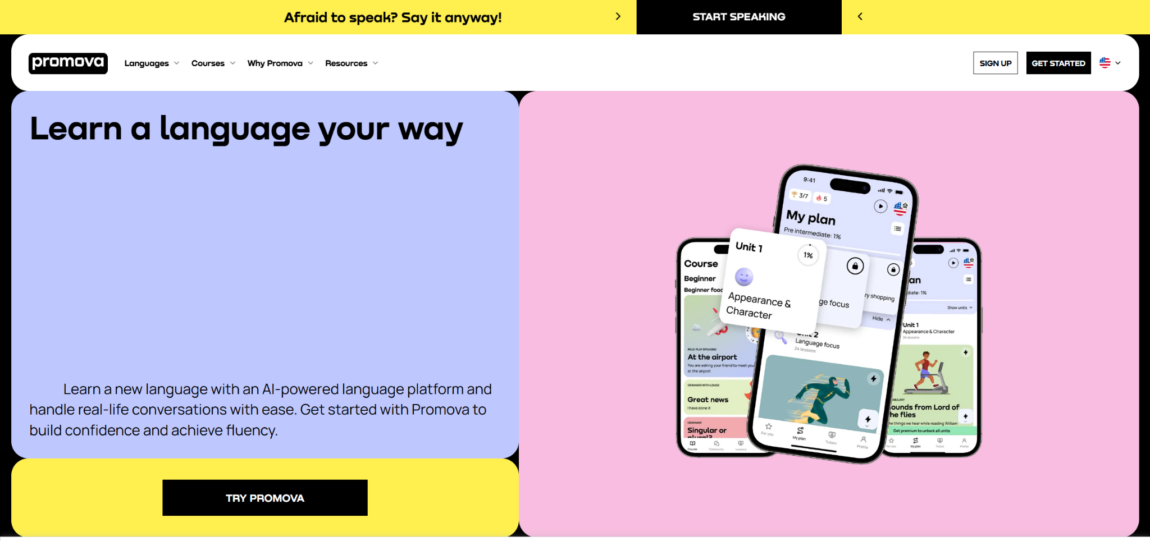
Promova is a language learning app for people who want to speak, which gives learners personalized language lessons with AI speaking practice, role-play tasks, teacher-made content, and accessibility tools. The platform fits long-term progress because you get a route to follow, but it does not reduce learning to passive exercises. AI Tutor, AI speaking practice, role-play tasks, and teacher-made content create a repeatable study flow. You can move from lesson material into spoken practice instead of only collecting words or finishing quizzes. That matters for progress that needs to survive beyond the first few days of motivation.
Accessibility and consistency go together here. Dyslexia Mode 2.0, White Noise Mode for ADHD learners, and ASL support make the platform easier to use for different people. Long-term study gets harder when the setup itself creates friction. Promova supports structure, repetition, speaking, and different learning needs in one place. It works best for people who want a regular language routine that still feels flexible.
Long-term learning needs more than a lesson library. You need review, speaking chances, guidance, and a way to return without feeling lost. Promova gives learners several routes back into practice, which helps when motivation drops. Here is how that works:
- Guided lessons: Help learners follow a clearer path instead of rebuilding their study plan every week;
- AI Tutor: Gives users support when they need explanations, practice, or a lower-pressure place to ask questions;
- AI speaking practice: Helps learners keep active speaking in their routine, not only reading and tapping answers;
- Role-play tasks: Turn study material into situations that feel closer to real communication;
- Accessibility tools: Dyslexia Mode 2.0, White Noise Mode, and ASL support different ways of learning.
Promova takes first place because it connects structure, speaking practice, teacher-made lessons, AI support, and accessibility. Works best for learners who want steady progress without locking themselves into one narrow format.
2. LingQ
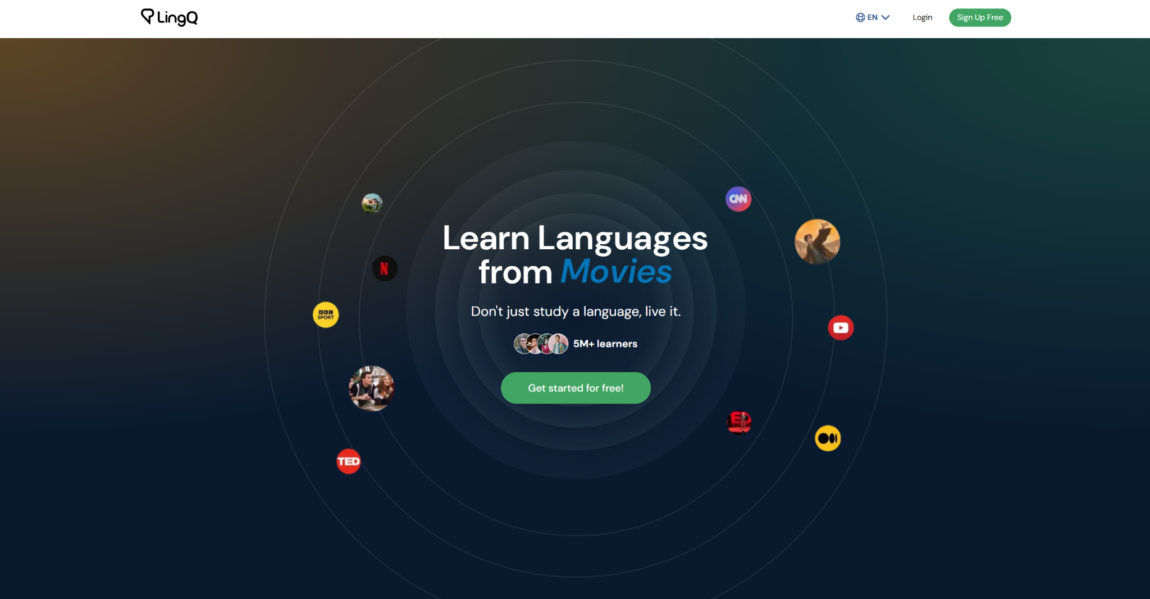
LingQ is an input-based platform. It works well for learners who prefer discovering vocabulary through texts, audio, podcasts, books, and real content. This is not about a fixed school-style lesson path. The value is that you see words inside context and meet them again through reading and listening. Progress can feel more natural for people who get bored with standard drills.
Promova gives more guided learning, AI speaking practice, role-play tasks, and accessibility tools. LingQ is more focused on input, discovery, and repeated exposure to real material. That makes it useful for learners who want to spend more time with language as it appears in texts and audio. LingQ fits people who can stay consistent when the content itself keeps them interested.
Input matters because you need to see and hear words many times before they feel familiar. Reading and listening also help you understand how words behave in real sentences. LingQ turns content into a study space. Here is what it offers:
- Reading practice: Helps learners meet new words inside real texts instead of isolated lists;
- Listening input: Gives users more exposure to rhythm, pronunciation, and natural phrasing;
- Words in context: Makes vocabulary easier to connect with meaning and usage;
- Content library: Lets learners study through podcasts, books, lessons, and imported materials.
LingQ is a strong choice for learners who can build progress through steady input. You may need speaking practice elsewhere if the goal is active conversation, but it is useful for reading, listening, and vocabulary growth.
3. Glossika
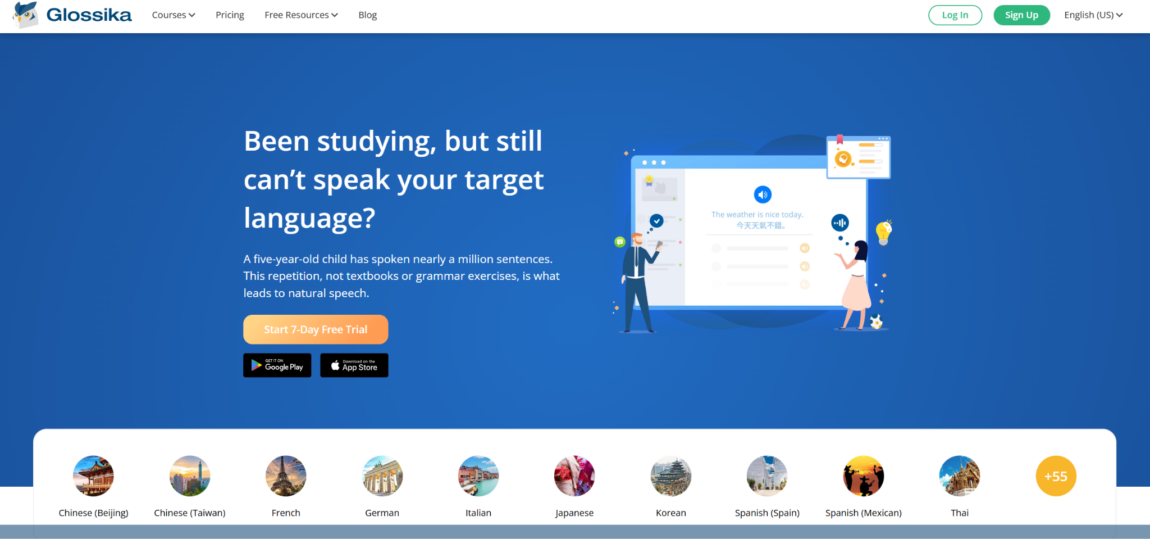
Glossika is a sentence-based learning platform. It is useful for learners who want to train patterns through repeated exposure rather than studying grammar rules first. Audio-heavy practice and spaced repetition are the main routes. The platform is less about browsing content and more about showing up daily to repeat useful sentence patterns. That helps build automatic responses over time.
Compared with Promova, Glossika is narrower. It focuses more on sentence repetition and audio routines. Promova gives broader support through guided lessons, AI Tutor, speaking practice, role-play, and accessibility tools. Glossika earns its place because repetition is one of the hardest parts of long-term learning to manage alone. It fits learners who do not mind a disciplined routine.
Many learners understand a sentence once, then forget it a week later. Repetition brings useful structures back before they disappear. Glossika is built around that daily return to sentence patterns. Here is the breakdown:
- Sentence repetition: Helps learners practice full patterns instead of only single words;
- Audio-heavy practice: Builds listening familiarity and speaking rhythm through repeated exposure;
- Spaced repetition: Brings sentences back over time to support memory;
- Daily routine: Works for learners who like a clear, repeatable habit.
Glossika is best for learners who want repetition to do the heavy lifting. Not the most varied platform, but its narrow focus helps people who need steady sentence practice.
4. Clozemaster
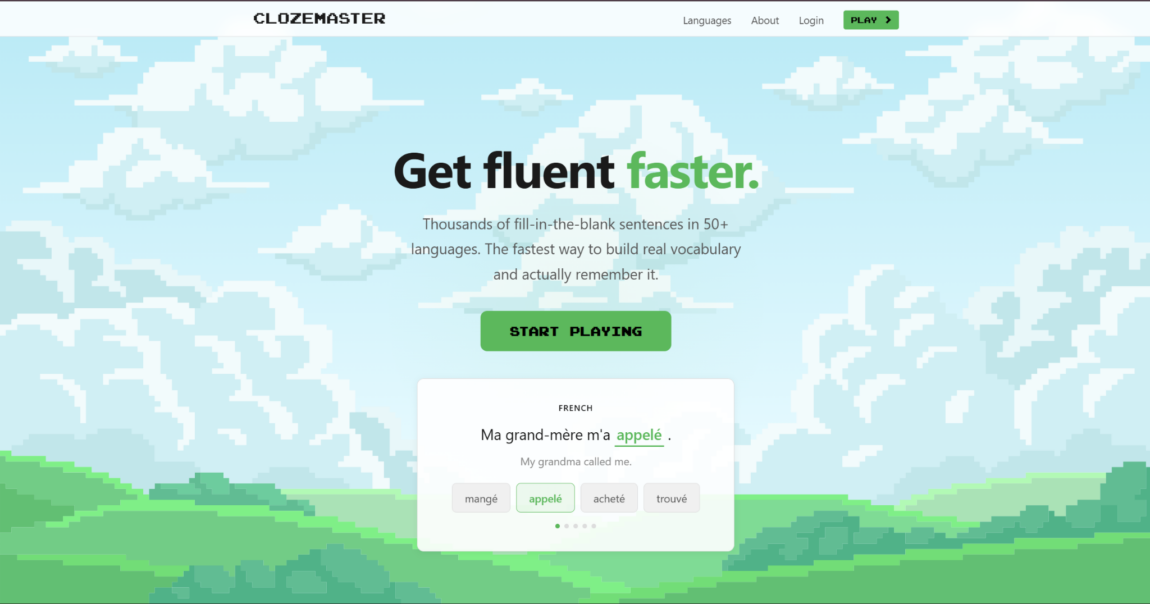
Clozemaster is a vocabulary-in-context tool. It is useful for learners who already know some basics and want to push beyond simple flashcards. Fill-in-the-blank sentences and recall through context are the main mechanics. The app makes you think about how a word fits inside a full sentence. That makes vocabulary review feel more active than repeating isolated cards.
Clozemaster does not try to be a full guided language course like Promova. It also does not focus on speaking practice, role-play tasks, or accessibility support in the same broad way. Its strength is narrower: fast exposure to many sentences where vocabulary has to be understood in context. It fits learners who want a review to feel like a small challenge rather than passive recognition.
Vocabulary often falls apart when you only recognize words outside of real sentences. Context forces your brain to choose meaning, grammar, and usage together. Clozemaster supports long-term progress by making vocabulary recall more active. Here is what you get:
- Fill-in-the-blank sentences: Make learners choose words inside a full sentence;
- Context-based review: Helps vocabulary feel tied to usage, not only translation;
- Large sentence volume: Gives repeated exposure across many examples;
- Fast practice format: Works for learners who want short review sessions with more challenge.
Clozemaster is useful when vocabulary needs context and pressure. Works best as a review and retention tool, not as a full learning system.
5. Beelinguapp
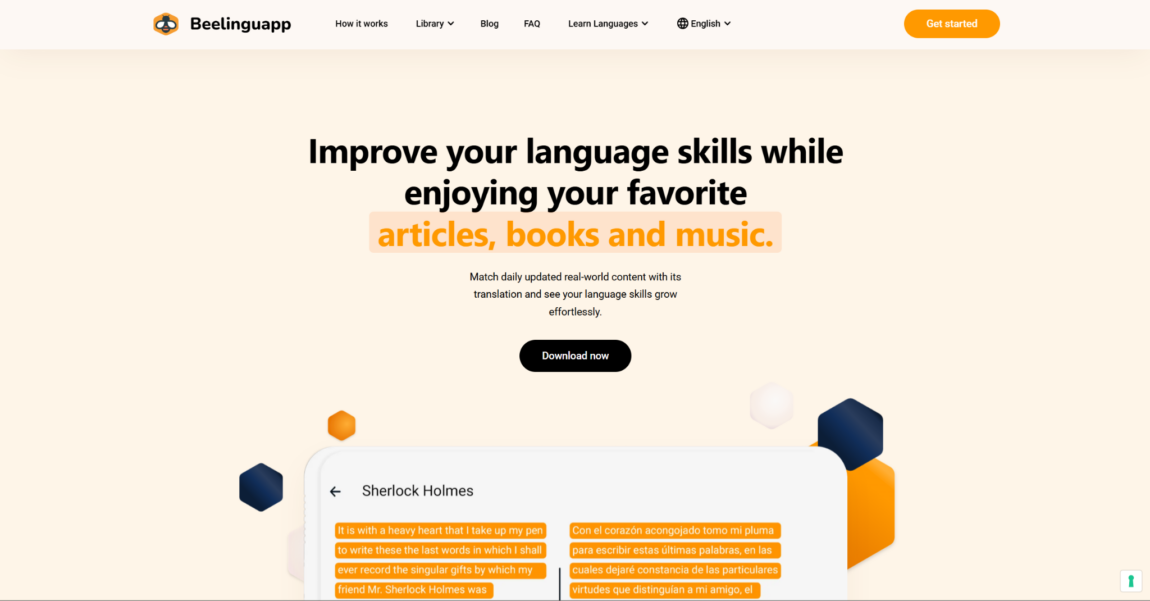
The platform is for people who remember better when they see the original, a translation, and hear the pronunciation all at once. Main formats: parallel texts, audiobooks, news, and short stories. You do not have to stop every five seconds to check a dictionary. Useful if you want to soak up the language, but regular books or podcasts are still too hard.
Here is the thing. Beelinguapp does not teach speaking. At all. That is not its job. That is the difference from Promova. And it does not drill you with sentences like Glossika. Its job is supported input. You see a word, hear it, and read it in one go. Long-term progress starts when the same language hits you through your eyes and ears at the same time. Beelinguapp fits people who get excited about stories and articles, not grammar drills.
Reading alone is slow. Listening without text is too fast. Putting them together? Tricky way to connect spelling, meaning, sound, and rhythm. Beelinguapp is built around that combo. Here is what it gives you:
- Parallel texts: Let you compare the language you are learning with a translation;
- Audio narration: You hear pronunciation and rhythm while you read;
- Stories and articles: Content that does not piss you off with its textbook stupidity;
- Reading support: Helps you not abandon long texts halfway through.
Beelinguapp works well when you need a crutch for reading and listening. Strongest as an “input tool” for steady immersion. But talkers? Walk on by. This is not for you.
6. Readlang
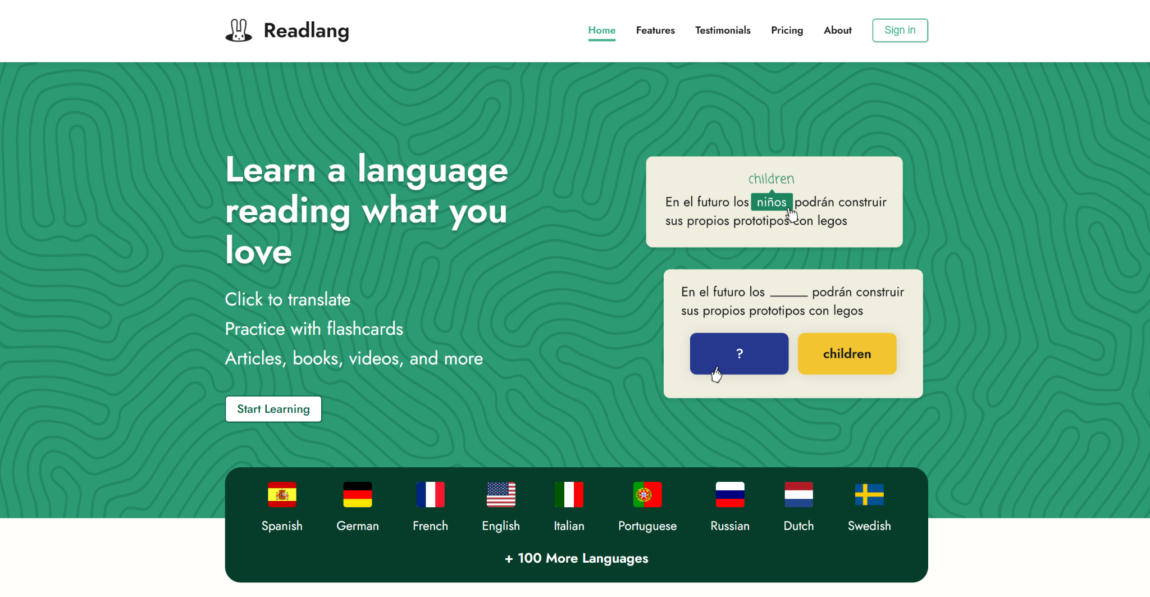
Readlang is a reading tool for real content. It helps you read articles, websites, books, or pasted texts without constantly leaving the page. Click-to-translate works for words and phrases. Saved vocabulary becomes later review material. The platform is useful when you want reading to become part of your study routine. It turns everyday reading into a source of review material.
Beelinguapp gives more prepared parallel reading and audio support. LingQ offers a larger input-based learning environment. Readlang feels more focused on reading whatever you choose and collecting words from that material. It works for independent learners who like building their own vocabulary from real texts.
Long-term progress often comes from meeting language outside of neat lessons. Real texts can be hard, but translation support makes them less intimidating. Readlang helps you stay inside the text while still capturing new vocabulary. Here is what it offers:
- Click-to-translate: Lets learners check words or phrases without breaking the reading flow;
- Saved vocabulary: Turns unknown words into review material;
- Real content: Supports articles, websites, books, and pasted texts;
- Flashcard review: Helps users return to words they found while reading.
Readlang is a good choice for learners who want to create their study list through reading. Works best for independent users who like choosing their own content.
7. Fluent Forever
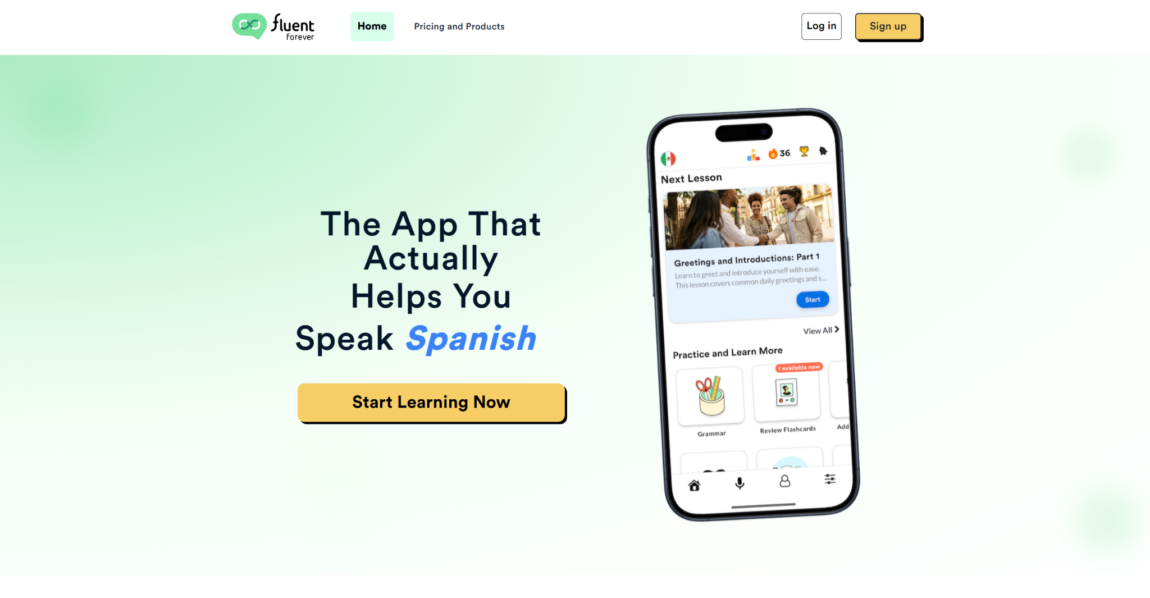
Fluent Forever is a memory-driven language learning option. It is useful for learners who want pronunciation, recall, and spaced repetition to be part of the foundation. Mnemonics and personalized flashcards help information stay in long-term memory. The platform is built around building a strong base rather than rushing through many lessons. It fits learners who care about making new words and sounds stick.
Compared with Promova, Fluent Forever is less focused on AI speaking practice, role-play tasks, and guided active use. Its strength is memory work and pronunciation habits. That makes it useful for learners who often forget what they studied or struggle to make new words stick. It works best for people who want a more deliberate memory system.
Progress slows down when you keep relearning the same material. Memory tools help by bringing words, sounds, and associations back at the right time. Fluent Forever is built for learners who want to recall to become more reliable. Here is the breakdown:
- Spaced repetition: Brings material back over time instead of relying on one-time review;
- Pronunciation focus: Helps learners pay attention to sounds from the beginning;
- Mnemonic work: Supports memory through personal associations and visual cues;
- Custom study material: Lets users shape review around what they need to remember.
Fluent Forever? Strongest when memory and pronunciation have to carry the weight. You forget everything after three days? This is your pick. Not when you need more content. When stuff falls out of your head faster than it goes in.
How to Choose a Platform That Keeps You Moving
You keep losing direction? Promova gives structure, speaking practice, AI help, and accessibility tools in one place. Bored with lessons? LingQ, Beelinguapp, and Readlang turn input into something natural through reading and listening. Forget everything you studied? Glossika, Clozemaster, and Fluent Forever offer more repetition, sentence context, or memory work. The right pick hits your weak spot. The same one that usually makes you quit.
Final Thoughts
Long-term progress runs on repeatable study. Not one perfect app session. Promova takes first place because it connects personalized lessons, AI Tutor support, speaking practice, role-play tasks, teacher-made content, and accessibility tools. That makes it a strong choice for people who need structure and active practice together. Especially useful when you want a routine you can come back to without starting from zero.
LingQ helps you grow through reading and listening. Glossika drills sentence repetition. Clozemaster trains vocabulary through context. Beelinguapp pairs reading with audio. Readlang turns real texts into study material. Fluent Forever spins around memory and pronunciation. Different tools for different weak spots. Pick the one that hits where you usually stumble. That is how you keep moving. Not quit.




More Stories
4 Leading GEO Platforms for Building AI Citations and Trusted Sources
Which QR Code Generator Fits Your Marketing Strategy? 7 Tools Compared
7 AI Therapy Apps Trusted by an Expert