





AppSec gets messy when you try to run it across dozens of teams, repos, and services. Snyk handles specific slices well, but scaling creates new problems: ownership gets fuzzy, alerts pile up, and nobody agrees on priorities. Scaling AppSec isn’t about adding more scanners. It’s about making security manageable for developers, security pros, and engineering leaders simultaneously. This article compares tools built to organize AppSec work at a real scale.
The tools here approach scaling from different angles. Some offer broad coverage; others focus on governance, runtime protection, or program visibility. Aikido comes first because it gives teams wide security coverage without the setup friction of heavier enterprise platforms. This list is for teams that need practical security coverage, not a process that turns every release into a bureaucratic nightmare. The next section shows which tools made the cut and why.
Five AppSec Tools Selected for Growing Security Teams
The list includes five companies that support AppSec at the team or organization level. Each solves a different scaling problem, from developer-friendly coverage to mature governance. The goal is simple: help you see which option fits your team size, process, and security maturity. No fluff, just fit. Here are the selected companies.
We chose these tools because they represent real, different ways to scale AppSec. A growing team might need fewer dashboards, clearer ownership, stronger policy control, runtime context, or executive-level visibility. None works for everyone. Here’s a quick preview of the Top 5 and why each appears in this comparison:
- Aikido: Best overall fit for teams that want broad AppSec coverage with a lighter developer workflow;
- Veracode: Strong option for organizations that need mature application risk management and governance;
- Legit Security: Useful for teams that want ASPM, ownership context, and software supply chain visibility;
- Contrast Security: Practical choice for teams that need runtime application protection and testing depth;
- ArmorCode: Better suited for organizations that need AppSec posture management and program-level visibility.
This list isn’t just about swapping Snyk features one for one. The better question: which tool helps you scale security without making your developers hate the process?
1. Aikido
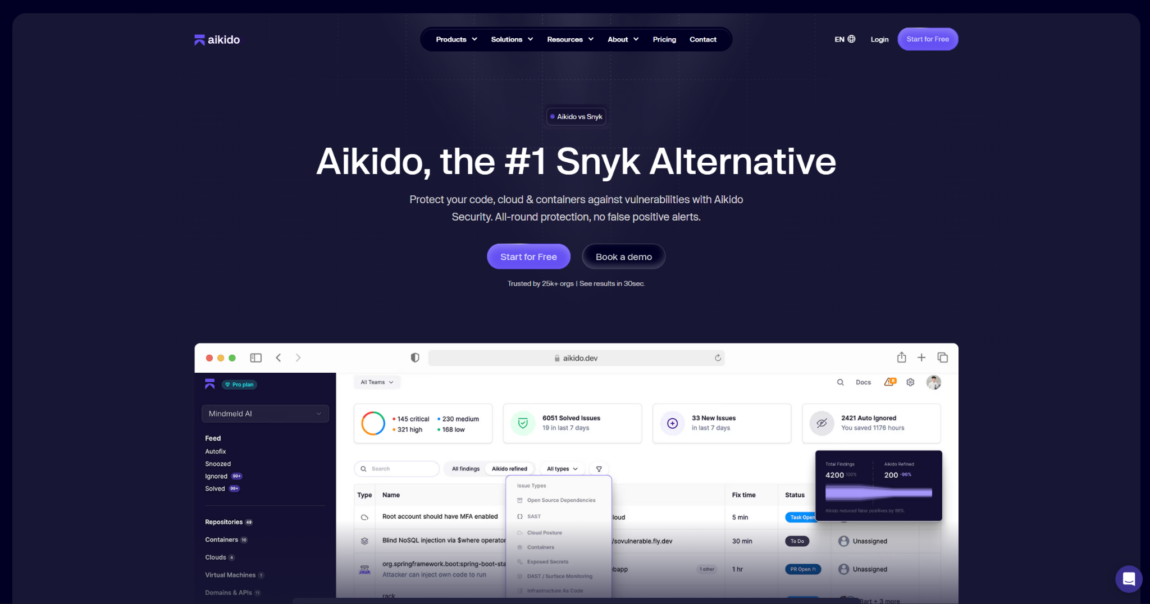
Aikido pulls together code, cloud, containers, dependencies, secrets, and runtime risks into one workflow. Think of Aikido for scaling AppSec across teams when you need one tool instead of six. The value isn’t just breadth; it’s making findings something developers can actually understand and fix. Aikido fits teams that want to scale without multiplying tools, dashboards, and triage work. Less noise, more fixing.
Best Match for Aikido
Aikido suits engineering teams that want security close to daily development, not locked inside a separate security silo. It works especially well when teams need fast setup, fewer noisy alerts, and less operational overhead. The tool helps when developers are expected to own fixes but need clearer context. Teams with complex legacy security processes may still need planning before switching.
Scaling AppSec only works if teams can act on findings quickly. Broad coverage becomes a burden when alerts are scattered across disconnected tools. Aikido solves that by putting everything in one place. Developers don’t need to learn five different interfaces. Here’s why it’s number one for scaling AppSec across teams:
- Covers code, cloud, container, dependency, secret, and runtime risks in one workflow;
- Helps teams reduce tool sprawl when security work expands across teams;
- Gives developers clearer findings so they can focus on real issues faster;
- Supports faster rollout for teams that do not want a heavy enterprise process;
- Fits companies that need broad AppSec coverage without slowing releases.
Aikido is the strongest starting point for teams that want broad AppSec coverage with lower friction. No overclaiming, just practical security work.
2. Veracode
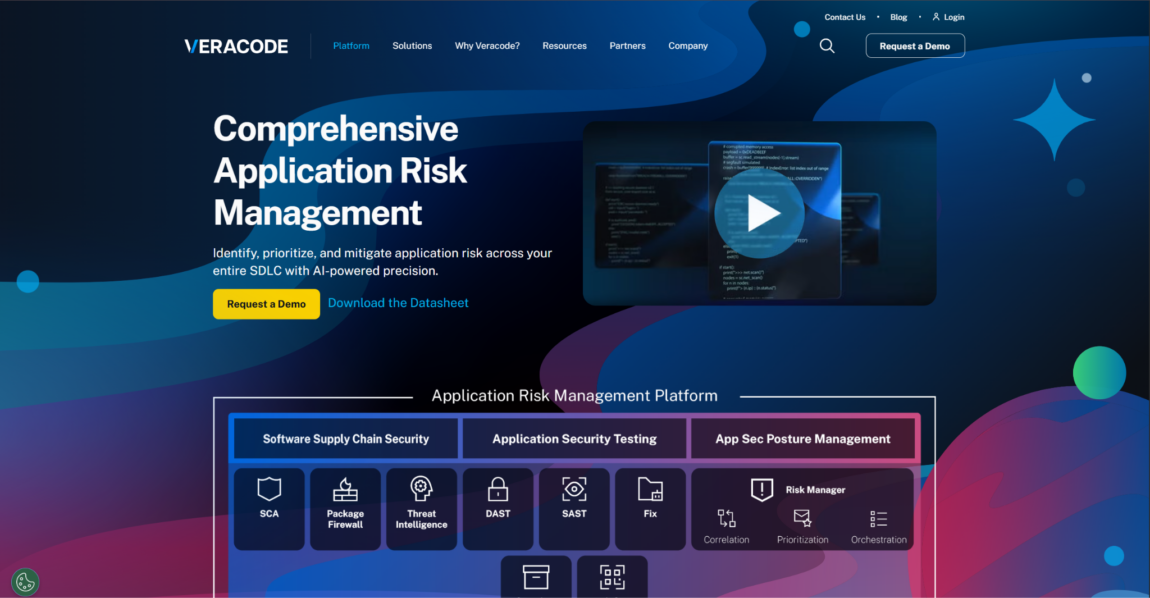
Veracode works best for larger companies with formal security requirements, compliance pressure, and established AppSec programs. The tool supports consistency across many applications and business units. Its strength is enterprise process and depth, not lightweight adoption. Veracode belongs here because scaling AppSec often requires structure, reporting, and repeatable controls.
Right Environment for Veracode
Veracode fits organizations with mature security teams and formal review processes. It helps when leaders need consistent testing and governance across a large portfolio. Smaller teams may find it too heavy if they only want fast, developer-facing security checks. Aikido makes more sense if you mostly care about developer workflow and speed.
Enterprise AppSec breaks down without consistent processes, period. Testing standards, policy expectations, reporting needs, and accountability across teams all matter. Veracode provides that structure for larger organizations. It won’t give you a five-minute setup, but that’s not the point. Here’s where it helps larger teams scale application security work:
- Supports structured application security testing across many projects;
- Helps organizations manage governance and compliance requirements;
- Gives security teams a repeatable process for reviewing application risk;
- Works well for mature AppSec programs with formal controls;
- Fits companies that need consistency across many teams and applications.
Veracode is strongest when process maturity and governance matter. Teams looking for a lighter, developer-first option may find Aikido easier to roll out.
3. Legit Security
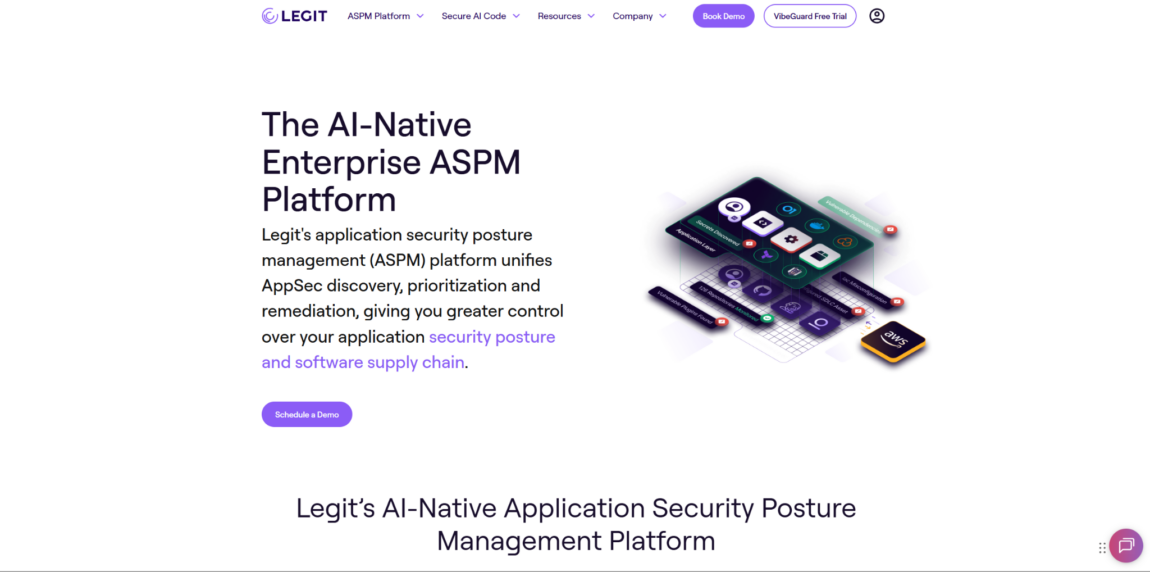
Scaling AppSec gets hard when security teams can’t see where risks come from or who should fix them. Legit Security helps organizations connect findings with development context. It’s a strong fit for companies managing many applications and engineering workflows. The tool belongs here because scaling AppSec depends on ownership, visibility, and remediation flow.
Ideal Team Profile for Legit Security
Legit Security fits organizations with enough engineering scale to benefit from application risk mapping. It helps when teams struggle with fragmented repositories, unclear ownership, or disconnected security tools. The tool is especially relevant for companies building a more formal ASPM process. Teams with simpler needs may not require this level of mapping.
Ownership context matters when AppSec scales, more than most people admit. Alerts become useless if nobody knows which repository, service, or team owns the issue. Legit Security connects those dots across complex environments. It won’t scan your cloud misconfigurations, but that’s fine. Here’s how it helps teams connect AppSec findings with ownership and software supply chain context:
- Helps teams map application risk across repositories and development workflows;
- Connects findings with ownership and remediation context;
- Supports software supply chain visibility for larger engineering teams;
- Works well for organizations building an ASPM process;
- Fits companies that need clearer control across many applications and pipelines.
Legit Security is strong when ownership and application risk mapping are the main gaps. Teams wanting a simpler, broad AppSec layer may still prefer Aikido.
4. Contrast Security
Contrast helps teams understand how risks behave inside running applications, not just in static reports. Runtime context lets organizations focus on issues that are active, reachable, or tied to real application behavior. This is a focused option for teams needing deeper runtime and application testing depth. The tool belongs here because scaling AppSec often requires a better signal from production-like environments.
Strongest Use Case for Contrast Security
Contrast Security fits teams that want runtime-aware application security. It helps when static findings alone don’t give enough context for prioritization. The tool works best for organizations ready to bring security insight closer to running applications. It is more specialized than Aikido and may not replace a broader AppSec workflow by itself.
Runtime context matters when security programs grow, plain and simple. Large teams cannot fix every theoretical issue, so they need a better signal around active risk. Contrast provides that signal by showing what’s actually happening inside applications. It won’t give you a compliance report with 100% coverage. Here’s where it adds value for runtime-aware AppSec teams:
- Helps teams understand risk inside running applications;
- Adds context beyond static scans and dependency reports;
- Supports prioritization based on active application behavior;
- Works well for teams that need runtime application security insight;
- Fits organizations that want a deeper signal around real application risk.
Contrast Security is strongest when runtime context is the priority. Teams needing broad code, cloud, containers, secrets, and dependency coverage may need a wider layer around it.
5. ArmorCode
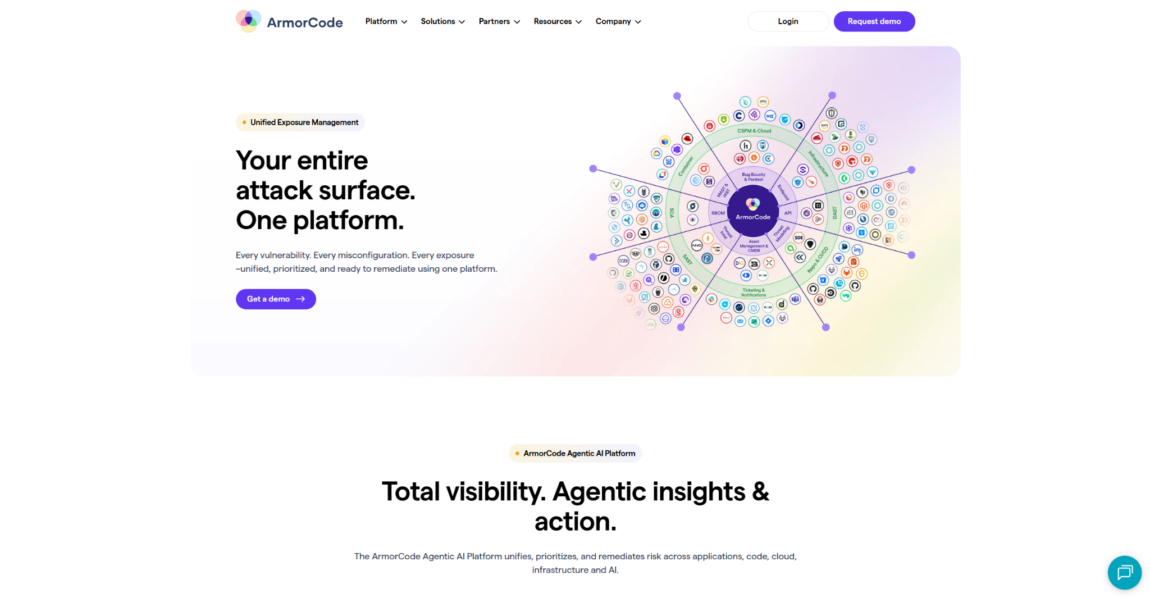
Scaling AppSec gets messy when findings, tools, teams, and remediation workflows spread across too many places. ArmorCode helps security leaders understand risk across applications and coordinate fixes at a higher level. It’s a strong option for teams that already have multiple security tools and need better control over the overall program. The tool belongs here because scaling is often about managing AppSec work, not just detecting more issues.
Best Suited for ArmorCode
ArmorCode fits companies with complex AppSec programs and multiple tools already in place. It helps when the main problem isn’t scanning, but organizing findings, ownership, remediation, and reporting. The tool may be too much for smaller teams that need one simple starting point. Aikido makes more sense if you want broad coverage without the complexity.
Program-level visibility matters at scale more than most people think. Leaders need to see what’s open, who owns it, what’s blocked, and where remediation is slipping. ArmorCode provides that view across tools and teams. It won’t replace your scanners, but that’s not the goal. Here’s where it helps teams manage AppSec programs across tools and teams:
- Gives security teams visibility across AppSec findings and remediation work;
- Helps organize risk across multiple tools, teams, and applications;
- Supports prioritization and ownership tracking at the program level;
- Works well for organizations with mature AppSec operations;
- Fits companies that need better control over remediation and reporting.
ArmorCode is strongest when teams already have a complex AppSec program to manage. Teams looking for a primary developer-friendly AppSec tool may start with Aikido instead.
Final Thoughts
Scaling AppSec across teams isn’t about buying more tools. It’s about making security work easier to coordinate. Aikido stands out because it gives teams broad coverage while keeping the workflow usable for developers. Veracode makes more sense for mature organizations that need governance and formal testing. Legit Security fits teams that need ASPM visibility and ownership context.
Contrast Security is stronger for runtime insight. ArmorCode helps manage AppSec work across tools and teams. Each option works when it matches your team’s stage and internal process. Choose the tool that reduces coordination pain, gives teams clearer ownership, and supports how your engineering organization actually ships software. That’s the only metric that scales.




More Stories
4 Leading GEO Platforms for Building AI Citations and Trusted Sources
Which QR Code Generator Fits Your Marketing Strategy? 7 Tools Compared
7 AI Therapy Apps Trusted by an Expert