





Converting traditional currency into cryptocurrency is still one of the biggest friction points for mainstream adoption. Many users trying to make their first purchase run into issues like failed transactions, incomplete KYC checks, or rejected payment methods. For businesses building Web3 products, the choice of onramp directly affects whether users complete their first transaction or drop off before getting started.
The strongest fiat-to-crypto solutions in 2026 focus on reducing these barriers through better routing, wider payment support, and smoother integration into existing flows.
1. Paybis
The consumer-focused exchange with 24/7 support, serving 180+ countries since 2014.
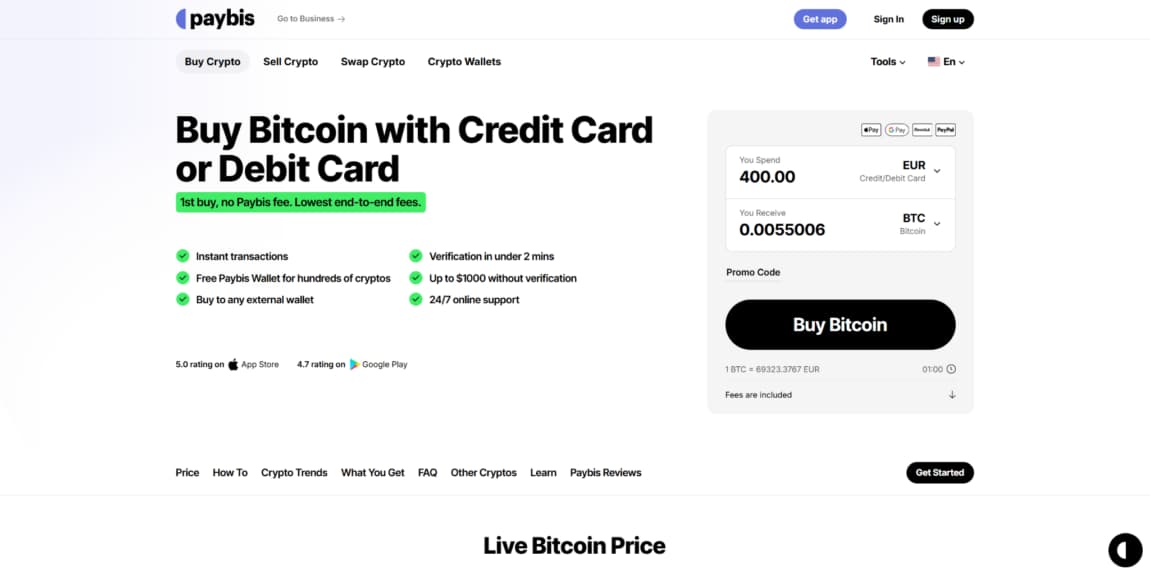
Paybis is built around fast and simple crypto purchases using credit and debit cards. The platform has been operating since 2014 and is available across most states in the United States as well as more than 180 countries. Its main focus is on retail users rather than deep business integrations, which shapes how the whole product works. New users can complete a purchase in a few minutes after verification, while returning users move even faster. Limits are flexible enough to cover both small transactions and larger volumes, making the platform usable across different user segments.
Where Paybis Works Best
Paybis fits products that need a simple way for users to enter the crypto market. It works well in retail-focused scenarios where speed matters more than customization. The platform is less suited for teams looking to embed complex payment logic or build fully branded flows, but it handles direct purchases reliably.
To see what the platform offers in practice, here are its main strengths:
- Fast purchase flow for verified users;
- Wide geographic coverage across multiple regions;
- 24/7 customer support availability;
- Flexible limits for different transaction sizes;
- Simple card-based onboarding experience.
This makes Paybis a solid entry point for users, though it is not designed as a full infrastructure layer for business payments.
Limitation: No transparent pricing structure published, making cost comparison difficult for businesses evaluating embedded onramp options.
2. Onramper
The intelligent aggregator solving the “7 out of 10 failed purchase” problem through smart routing across 30+ onramp providers.
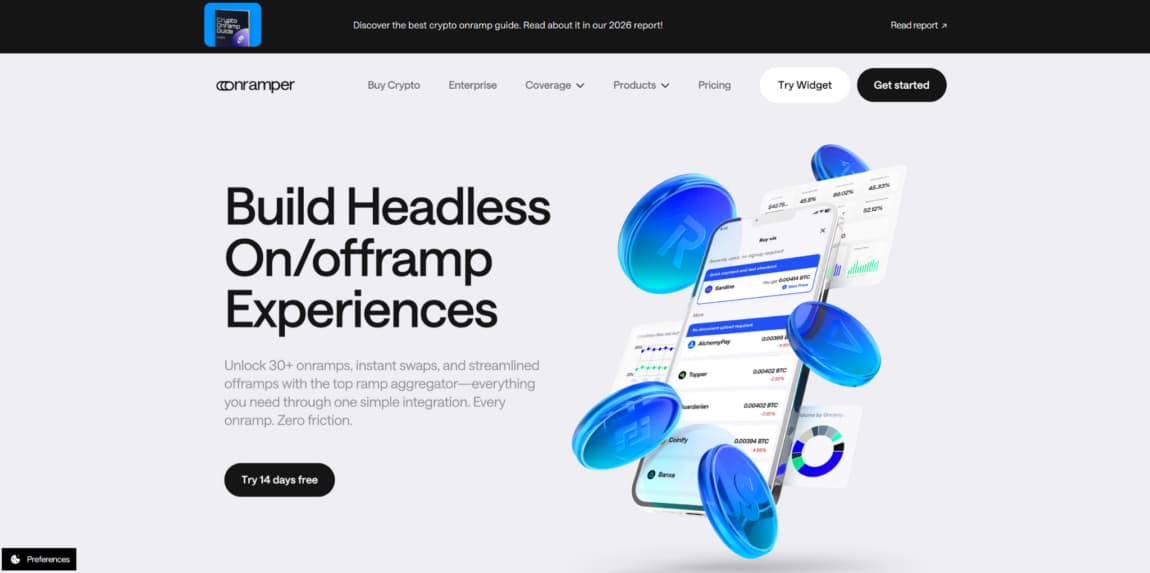
Onramper is built around one idea: instead of relying on a single provider, it routes transactions across multiple onramps to improve success rates. The platform connects to 30+ providers and selects the most suitable option for each transaction. This helps reduce failed purchases, which are common when users try to buy crypto through a single gateway.
The system evaluates different parameters in the background and chooses the route that is more likely to go through. For products with global users, this approach can noticeably improve conversion.
Where Onramper Works Best
Onramper fits platforms that want to avoid dealing with multiple integrations and providers manually. It works well in products where users come from different regions, and payment behavior varies. Instead of building separate connections, teams can use one integration and let the routing logic handle the rest. It is especially useful for apps that prioritize conversion rates and want to reduce failed transactions without constantly optimizing flows.
To understand what the platform offers, here are its main capabilities:
- Access to multiple fiat-to-crypto onramps;
- Support for crypto-to-fiat offramps;
- A routing engine that selects providers dynamically;
- Transaction analytics for monitoring performance;
- Single integration for multiple payment methods.
This makes Onramper a practical option for scaling onboarding, though its long-term track record is less clearly documented.
3. MoonPay
The enterprise-grade infrastructure powering crypto access for nearly 500 companies and 30 million end users.
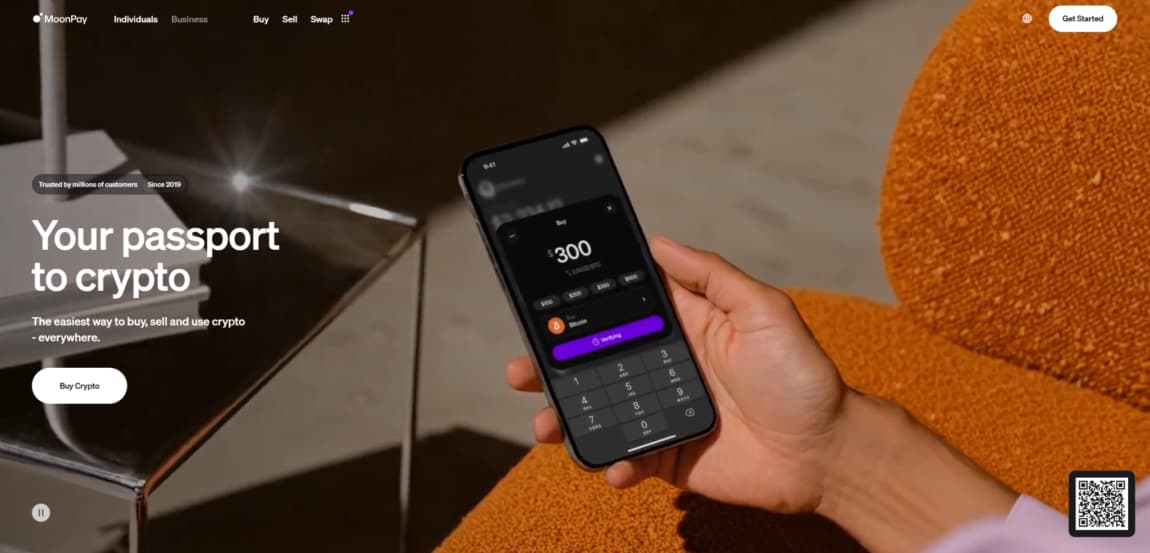
MoonPay is built for products that need a stable way to onboard users into crypto at scale. Since launching in 2019, it has been integrated into hundreds of applications and is used by millions of people. The platform supports common payment methods like cards, Apple Pay, PayPal, and Venmo, which helps keep the experience familiar from the start.
It also operates across several major markets, including the United States, Europe, and Canada, which makes expansion easier for teams working in multiple regions.
Where MoonPay Works Best
MoonPay works best in products where onboarding needs to feel simple and predictable for a large number of users. It is often used by fintech apps and platforms that bring in new users every day and cannot afford friction at checkout. The system handles payments, compliance checks, and delivery in the background, which reduces the amount of work required on the product side. It also supports basic asset management, so users can move, receive, and hold funds without switching tools.
To understand what the platform offers, here are its main capabilities:
- Crypto purchases through cards and digital wallets;
- Support for Apple Pay, PayPal, and similar methods;
- Ability to sell and trade crypto within the same flow;
- Tools for sending and receiving assets;
- Coverage across multiple regulated markets.
This makes MoonPay a strong option for scaling onboarding, though pricing details usually require direct discussion.
| Feature | Coverage |
|---|---|
| Payment processing | Cards, Apple Pay, PayPal, Venmo |
| Buy cryptocurrency | Multiple assets supported |
| Manage stablecoins | Send, receive, hold |
The service operates on usage-based pricing without published rate cards, typical for enterprise infrastructure plays targeting high-volume partners rather than direct SMB customers.
What’s missing: No public team profiles or leadership bios, which may concern partners evaluating long-term strategic alignment and executive accessibility.
4. NOWPayments
The non-custodial gateway for merchants accepting 350+ cryptocurrencies at 0.5% flat fee.
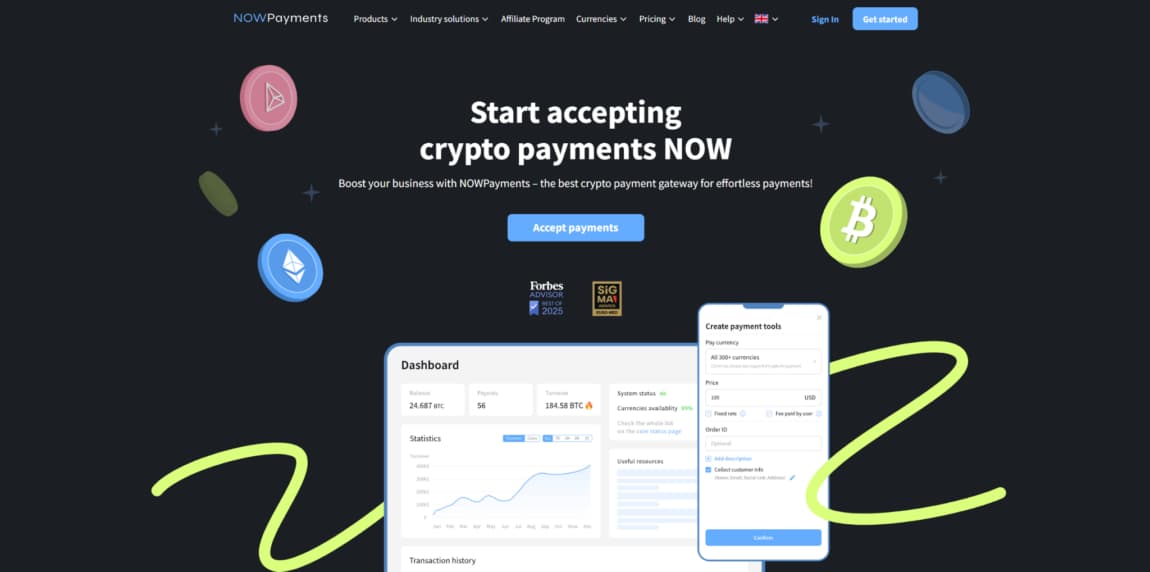
NOWPayments is built for businesses that want to accept crypto directly rather than help users buy it. The platform has been operating since 2019 and supports a wide range of assets, including Bitcoin, Ethereum, and hundreds of other cryptocurrencies.
Its main difference is the non-custodial model, where funds go straight to the merchant’s wallet instead of passing through the platform. This gives businesses full control over their assets and reduces reliance on third parties. The setup is simple and does not require complex integration.
Where NOWPayments Works Best
NOWPayments works best in cases where users already hold crypto and need a way to pay with it. It fits online stores, services, and projects that want to expand payment options without adding traditional processing layers. The platform is easy to integrate through API or plugins, which makes it accessible even for smaller teams. At the same time, it does not solve onboarding from fiat, so it is not suitable for bringing new users into crypto.
To understand what the platform provides, here are its main capabilities:
- Support for 350+ cryptocurrencies;
- Non-custodial payments with direct wallet transfers;
- API integration for custom setups;
- Plugins for common e-commerce platforms;
- POS tools for offline transactions.
This makes NOWPayments a flexible option for accepting crypto, but not a replacement for fiat-to-crypto onramps.
5. Plaid
The financial data network connecting 12,000+ institutions—foundational infrastructure for onramp KYC and bank verification.
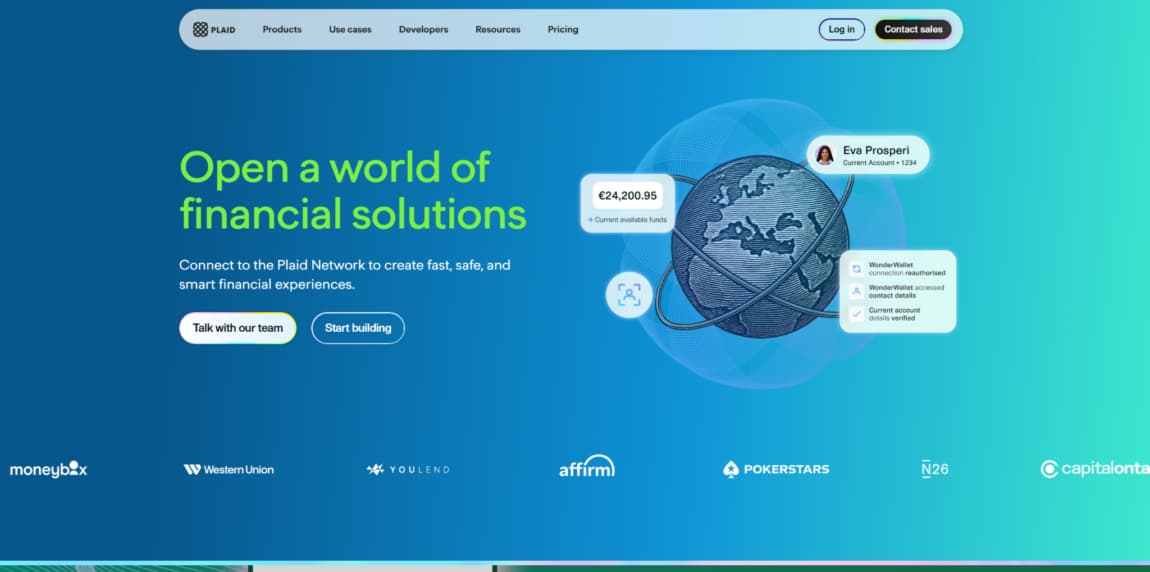
Plaid is not a crypto onramp by itself, but it plays a key role in how many onramps work. Since 2013, it has been used as a connection layer between apps and bank accounts, covering thousands of financial institutions across multiple markets. Instead of handling crypto purchases directly, Plaid provides the infrastructure that allows platforms to verify users and initiate payments. This makes it a common part of onboarding flows where compliance and identity checks are required.
Where Plaid Works Best
Plaid fits products that want to build their own onboarding logic instead of relying on ready-made widgets. It is often used by platforms that need direct access to banking data and more control over verification processes. By linking user accounts, it enables bank transfers as an alternative to card payments, which can reduce costs and increase limits. At the same time, it requires additional development work and does not function as a standalone solution for buying crypto.
To understand what Plaid provides, here are its main capabilities:
- Bank account linking across multiple institutions;
- Identity verification for KYC flows;
- Fraud detection and risk scoring;
- Access to financial and transaction data;
- Support for ACH-based payments.
This makes Plaid a foundational tool for onboarding, though it needs to be combined with other services to complete the full crypto purchase flow.
| Tier | API Calls | Support |
|---|---|---|
| Free | 200 live calls per product | Standard |
| Custom | Unlimited | Premium + account management |
Pricing starts with 200 live API calls per product on the free tier, scaling to custom enterprise agreements for unlimited volume.
The gap: No team information published, and Plaid itself doesn’t facilitate crypto purchases—it’s middleware that onramp providers integrate. Businesses building on-ramps may use Plaid; end users never interact with it directly.
Final Thoughts
This comparison focuses on what can actually be verified: how platforms handle fiat-to-crypto conversion, where they operate, how long they’ve been around, and whether pricing is clear. If something isn’t documented, it’s treated as a limitation.
Some tools were left out because they focus more on merchant payments than user onboarding, or don’t provide enough public information. In practice, the main difference comes down to how smoothly users can go from fiat to crypto and how predictable that process is inside your product.




More Stories
4 Leading GEO Platforms for Building AI Citations and Trusted Sources
6 PPF Installers in Chicagoland for Daily, Luxury and Performance Cars
5 Essential Forex Trading Platforms in 2026